John’s scalp story did not begin with a dramatic moment.
It began quietly.
Small bumps appear along the back of the scalp. A little irritation at the neckline. Something easy to dismiss at first.
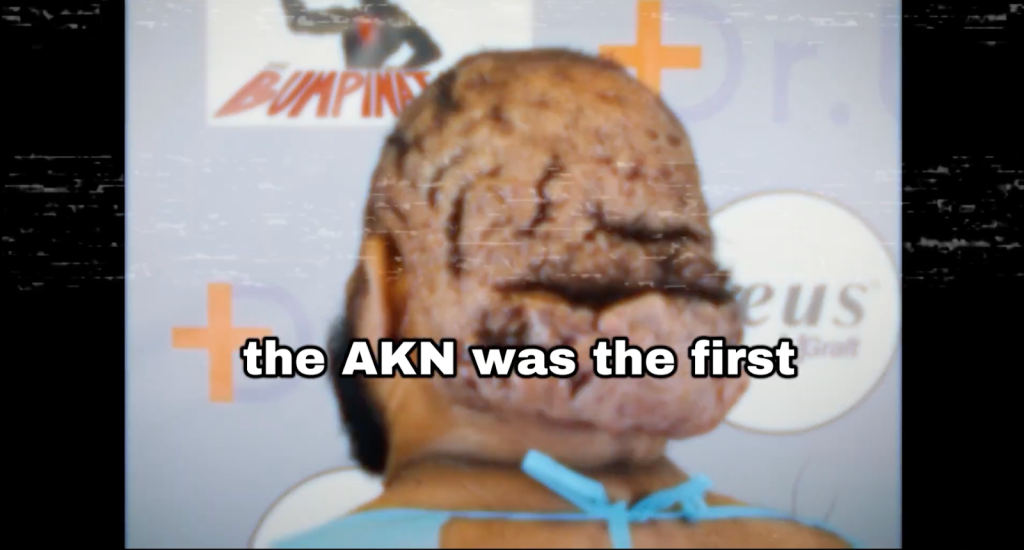
But those bumps were not random. They were the early signs of chronic folliculitis of the nape, another name for acne keloidalis nuchae (AKN).
This condition is an inflammatory disease that affects the hair follicles along the back of the scalp and neck. Over time, repeated inflammation can cause thickened skin, scarring, and clusters of persistent bumps.
For John, this was the first trigger.
The beginning of a much larger process unfolding beneath the skin.
The Invisible Signals Beneath the Skin
When chronic inflammation develops around hair follicles, the body begins releasing chemical messengers into nearby tissues.
These signals include cytokines and growth factors.
They are part of the immune system’s natural response to injury or irritation. But when inflammation becomes persistent, these signals can begin affecting surrounding areas of the scalp.
Instead of resolving the problem, they may encourage more inflammation and tissue changes nearby.
Over time, the scalp environment itself can change.
And that shift can allow additional diseases to develop.
When One Condition Opens the Door to Others
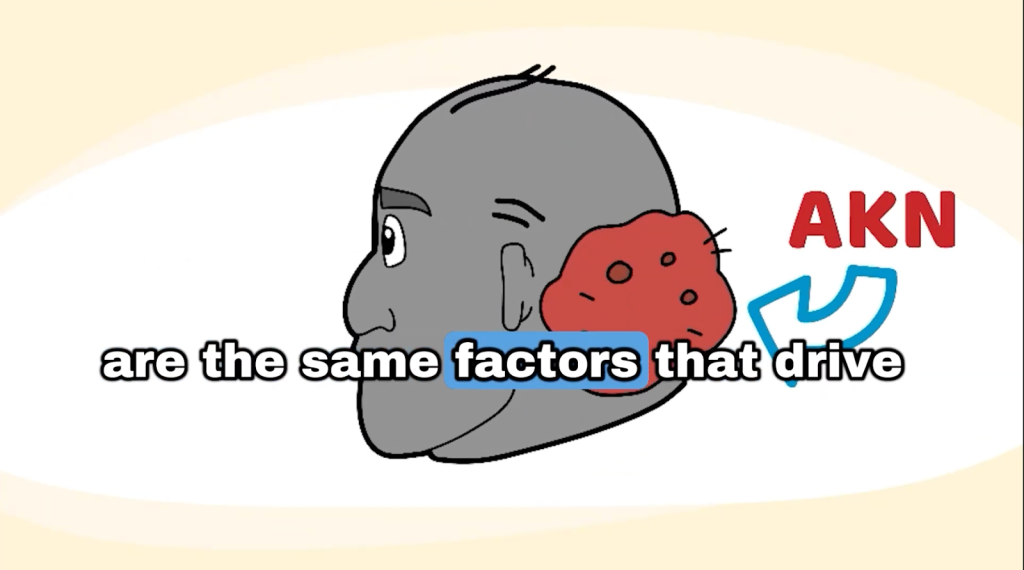
During the episode, Dr. Sanusi Umar explains that the same biological mechanisms responsible for chronic folliculitis of the nape can also drive other inflammatory scalp conditions.
One of those conditions is dissecting cellulitis, a deeper inflammatory disease that can cause painful nodules, swelling, and sometimes drainage beneath the scalp.
Another condition linked to similar biological pathways is cutis verticis gyrata (CVG), a disorder in which the scalp develops thick folds resembling the ridges of a mountain range.
According to Dr. Umar, once the inflammatory cascade begins, the scalp becomes more vulnerable to these overlapping diseases.
What started as one condition can evolve into a complex network of related disorders.
Turning Off the Engine of Inflammation
For Dr. Umar, the treatment strategy focuses on one critical goal.
Stopping the source.
If the diseased follicles responsible for the chronic inflammation can be removed, the biological signals driving the process can also be reduced.
By eliminating those follicles, the release of cytokines and growth factors decreases. Without those signals constantly stimulating the surrounding tissue, the inflammatory cycle can finally slow down.
Dr. Umar often describes this step as removing the engine that keeps the disease running.
When the source of inflammation is addressed, the scalp environment has a chance to stabilize.
And the likelihood of additional inflammatory diseases developing becomes much lower.
For patients like John, that shift can mean the difference between a cycle that continues for years… and a turning point toward healing.
For medical details of this case, visit dru.com.
Watch John’s Story
🎥 Watch the thirteenth chapter of John’s transformation here:
Take the Next Step
If you or someone you know is struggling with Folliculitis Decalvans (FD), don’t wait. Early intervention and expert care can change lives.
Fill out our free online consultation form to have your case personally reviewed by Dr. Sanusi Umar.
Individual results may vary. This story reflects one patient’s personal experience with Folliculitis Decalvans (FD) and treatment with Dr. Umar. Consult with a qualified physician for personalized advice.
